
How to Source Products from China:A Step-by-Step Guide for Overseas Buyers
Daily-use ceramics case study: choosing the right production cluster, comparing factories on the same basis and controlling the order from RFQ to shipment.
SOURCING GUIDES:
| Successful sourcing from China begins before the first supplier search. Define the product and market requirements, split the brief into logical product families, route each family to the most suitable production cluster, issue one standardized RFQ, verify factory capability, compare the total commercial package, approve controlled samples, inspect mass production and coordinate export documents. For ceramics, the right city can be as important as the right company. |
China Is a Network of Specialized Manufacturing Clusters
Overseas buyers often start with a broad search such as “ceramic manufacturer in China.” That search can return thousands of companies, but it does not answer the most important question: which manufacturing ecosystem is best suited to this exact product, order size, finish, packaging standard and destination market?
A mug with reactive glaze, a hotel bone-china dinner set, a sculptural white-porcelain gift, a sanitary basin and a large-format architectural slab are all “ceramics,” yet they rely on different bodies, forming processes, kilns, decoration lines, testing methods, packing systems and supplier networks. Treating them as one category creates false price comparisons and increases the risk that a supplier is strong in one process but weak in the one the buyer actually needs.
For practical sourcing, it is more useful to think in terms of regional supplier pools. The following map is a procurement guide—not an exclusive or legal classification. Capabilities vary at factory level and must still be verified.
| Supplier pool | Best-fit categories | Why buyers use it | What to verify |
| Chaozhou, Guangdong | Tableware, special-shaped serving pieces, kitchen ceramics, sanitary ceramics | Broad product variety, strong moulding and decoration ecosystem, export-oriented daily-use production, and major sanitary-ceramic capacity. | Confirm the actual factory process, mould ownership, glaze/decal consistency, food-contact testing and whether sanitary and tableware capabilities are in the same legal entity or separate plants. |
| Liling, Hunan | Mugs, stoneware, coloured-glaze ware, large-volume daily-use ceramics | Strong export base for daily-use ceramics; good fit for standardized cup programmes, stoneware, large repeat orders and automated production. | Lock capacity, weight, body type, rim and handle tolerances, colour range, decal or gold durability, dishwasher/microwave claims and gift-pack execution. |
| Dehua, Fujian | Tea sets, white porcelain, planters, craft ceramics, home décor | Recognized white-porcelain and creative-ceramics ecosystem, with strength in tea culture, sculptural pieces, decorative homeware and product development. | Separate food-contact factories from decorative-only workshops; verify firing stability, whiteness, translucency, handmade variation, planter drainage and scale-up capability. |
| Jingdezhen, Jiangxi | High-end customization, art gifts, cultural products, limited editions | Deep ceramic culture, design talent and fine artistic techniques—well suited to story-led collections, premium gifts and customized cultural products. | Approve a physical master sample, define the acceptable handmade variation, confirm intellectual-property ownership, lead time, breakage allowance and realistic scale. |
| Tangshan & Zibo | Bone china, premium hotelware, reinforced/high-quartz porcelain, institutional tableware | Northern China has established high-grade tableware capability. Tangshan is especially strong in bone china; Zibo supports bone china, reinforced porcelain and other performance-oriented bodies. | Verify body composition and performance claims, replacement availability, edge-chip and thermal-shock criteria, colour continuity, hotel back-stamp, packing and long-term repeatability. |
| Foshan, Guangdong | Architectural ceramics, tiles, slabs, sanitary and bathroom project products | A mature building-materials ecosystem with design, equipment, accessories, sanitary hardware and project-supply capabilities. | Check shade/calibre control, slab flatness, batch continuity, breakage rate, loading plan, system compatibility, project documents and after-sales responsibility. |
| Beiliu, Guangxi | Cost-driven, high-volume daily-use ceramics | An export-oriented daily-ceramic base that can be competitive for repeat, standardized and price-sensitive programmes. | Do not trade price for uncertainty: verify export experience, kiln capacity, decoration line, sample-to-production consistency, social/compliance requirements and inspection readiness. |
What Each Ceramic Region Is Best At
1. Chaozhou: broad tableware variety, special shapes and sanitary ceramics
Chaozhou is one of China’s best-known ceramic production and export centers. For overseas buyers, its practical advantage is breadth: factories and supporting workshops can cover plates, bowls, serving pieces, mugs, kitchenware, decorative effects, mould development and a large sanitary-ceramic ecosystem. Official Chaozhou policy materials also identify the city as one of China’s largest sanitary-ceramic production areas.
The pool is particularly useful when a programme combines conventional tableware with irregular or mould-dependent shapes, such as sauce boats, handled bowls, divided plates, rectangular platters or embossed pieces. However, broad local capability does not mean every factory can make every item. A supplier that is excellent at decals and hotel plates may not be the right plant for a large slip-cast serving piece; a sanitary factory should not be evaluated as though it were a food-contact tableware factory.
BUYER CHECKS
- Ask which processes are performed in-house: body preparation, moulding, glazing, decoration, firing, sorting and packing.
- Require the supplier to quote against its own product image and completed specification fields—not only the buyer’s reference picture.
- For irregular shapes, confirm mould cost, mould ownership, tooling lead time, deformation criteria and acceptable size variation.
2. Liling: mugs, stoneware and large-volume daily-use ceramics
Liling has a large, export-oriented daily-use ceramic industry covering cups, tableware, stoneware and artistic ceramics. Hunan government reporting describes automated production, a strong stoneware association and extensive export reach. For buyers running repeat cup programmes, Liling is a logical first pool because the region combines product development, decoration, materials, equipment and mass-production capacity.
The strongest sourcing fit is not simply “a mug.” It is a tightly specified programme: 350 ml, 400 ml or 450 ml capacity; target weight; straight or curved body; handle clearance; embossed or smooth surface; inside decoration; reactive or solid glaze; gold rim; silicone or plastic lid; straw; gift sleeve; colour box; and carton quantity. Each feature changes factory suitability, production flow, breakage risk and cost.
BUYER CHECKS
- Confirm whether the body is porcelain, stoneware or another ceramic body and make sure all quotations use the same material definition.
- Define whether capacity is brimful or usable capacity; specify tolerances for height, diameter, weight and handle alignment.
- Test decoration durability and validate any dishwasher, microwave or food-contact claim for the destination market.
3. Dehua: white porcelain, tea ware, planters and creative homeware
Dehua is internationally associated with white porcelain and has a strong creative-ceramics and craft ecosystem. It is a useful sourcing pool for tea sets, sculptural gifts, white-porcelain collections, vases, planters and decorative homeware, especially when form, whiteness, translucency and cultural expression matter as much as unit cost.
The key procurement distinction is between a studio or craft workshop that can create a beautiful prototype and a factory system that can reproduce it consistently at commercial scale. Food-contact tea ware also requires a different compliance and quality-control plan from a decorative figurine or planter.
BUYER CHECKS
- Classify each item as food-contact, decorative, planter or mixed-use before selecting suppliers and tests.
- For planters, specify drainage holes, saucers, water resistance, outdoor use, frost expectations and retail packaging.
- For white porcelain and sculptural forms, establish acceptable colour, translucency, pinhole, warpage and handmade-variation limits.
4. Jingdezhen: premium customization, art gifts and cultural products
Jingdezhen is the right pool when the commercial value comes from design, artistry, cultural meaning or premium customization. The city’s official quality-development policy emphasizes both daily-use ceramics and refined art ceramics, while its broader ecosystem supports artists, designers, cultural brands, studios, institutions and specialized production.
This is often a sample-led rather than catalogue-led sourcing route. Buyers should expect more development dialogue, more sensitivity around intellectual property, longer sampling cycles and lower practical production scale than a highly automated commodity programme. The right evaluation metric may be artistic fidelity and brand value—not the lowest ex-factory price.
BUYER CHECKS
- Use a signed master sample, high-resolution colour standard and written workmanship tolerance.
- Clarify ownership and permitted use of artwork, moulds, patterns, calligraphy and cultural elements.
- Separate handmade variation from defects and agree the approval method before mass production.
5. Tangshan and Zibo: bone china, hotelware and performance-oriented bodies
Tangshan is widely recognized as China’s major bone-china production base. Zibo’s industrial planning highlights high-grade bone china, high-quartz porcelain and reinforced ceramics. Together, these northern pools deserve attention for premium tableware, hotel and institutional programmes, banquet ware and products where body performance, whiteness, edge strength and repeat replacement matter.
Hotel procurement has a different risk profile from retail gifting. A hotel buyer may need years of replacement availability, stable white tone, stackability, standardized back stamps, edge-chip resistance, dishwasher durability and packaging suitable for repeated project deliveries. Those requirements should be built into the supplier-selection score—not added after the first order.
BUYER CHECKS
- Ask for evidence supporting body and performance claims; do not accept “bone china” or “reinforced” as a marketing label only.
- Confirm long-term replacement policy, minimum reorder quantities and control of white tone across production batches.
- Define hotel-use tests, sorting grades, edge-chip expectations, stacking, logo/back-stamp execution and spare quantity.
6. Foshan: architectural ceramics, slabs and bathroom projects
Foshan should be treated as a different procurement category. It is a major ecosystem for architectural ceramics, tiles, large-format slabs, bathroom products, hardware, project design and related equipment. It is often the right starting point for building-material distributors, hotel projects, residential developments and bathroom systems—but it is not automatically the best pool for mugs or plates.
Here the sourcing unit is often a system rather than a single object. The buyer may need consistent batches, matching accessories, technical data, project samples, installation guidance, container loading plans and after-sales responsibility across several product families.
BUYER CHECKS
- For tiles and slabs, specify shade, calibre, flatness, surface finish, size tolerance, breakage allowance and batch controls.
- For sanitary and bathroom projects, confirm compatible hardware, drainage, water fittings, spare parts and installation documentation.
- Model the landed cost and container loading—not only the square-metre or unit price.
7. Beiliu: cost-competitive, high-volume daily-use ceramics
Beiliu is an established export-oriented daily-use ceramic base and can be a strong option for standardized, cost-sensitive programmes with meaningful volume. It should be evaluated when the buyer prioritizes scale, repeatability and competitive cost over highly complex customization.
The sourcing discipline must remain the same. A low quotation is only useful when the factory can hold the approved body, glaze, colour, sorting standard and packaging across mass production. Buyers should verify whether the quoted price assumes a different grade, thinner body, simpler decoration, lower packaging standard or different inspection acceptance.
BUYER CHECKS
- Confirm the exact quality grade, allowable defects, packing method and inspection standard behind the quotation.
- Verify capacity, export documentation, production schedule and whether key processes are subcontracted.
- Use production samples and pre-shipment inspection to prevent silent material or workmanship downgrades.
A Step-by-Step China Sourcing Process
The same sourcing logic applies beyond ceramics. The product details will change, but the sequence—scope, route, compare, verify, approve, inspect and deliver—remains useful across most manufactured categories.
| 1 | Define the market, channel and use case:State the destination country, sales channel and end-use before contacting factories. Retail tableware, hotel replacement ware, promotional gifts, food-service products and architectural projects require different quality, packaging, documentation and supplier capabilities. |
| 2 | Convert the buying idea into a line-level sourcing brief:Create one row per SKU and include a reference image, product description, dimensions, capacity, weight, material/body, colour and decoration, packaging, units per carton, estimated quantity, target market, required tests, desired trade term and quotation deadline. Unclear specifications create quotations that look comparable but are not. |
| 3 | Split the project into product families:Do not ask one factory to quote an unrelated mix just because every item is ceramic. Separate mugs, flatware, special-shaped serving pieces, tea sets, decorative ceramics, hotelware, sanitary products and architectural ceramics. Then route each family to the strongest supplier pool. |
| 4 | Build and verify a qualified supplier longlist:Screen legal identity, manufacturing location, product focus, years of export experience, key equipment, kiln and decoration capability, production capacity, quality system, test history and reference markets. Distinguish a direct factory from a trader—but do not assume direct factory always means better. The question is who can control the required process and remain accountable. |
| 5 | Issue one standardized RFQ to all shortlisted factories:Every supplier should receive the same revision of the brief. Require the factory to complete the same fields and paste its own quoted-product image. Ask it to identify deviations rather than silently replacing the buyer’s requirement with a similar catalogue item. |
| 6 | Normalize quotations before comparing price:Compare unit price together with MOQ, mould/tooling, sample cost, decoration charge, packaging, inland transport, port, lead time, payment terms, testing, inspection and estimated breakage. A low unit price with a higher MOQ, weaker packing or missing process can be the more expensive offer. |
| 7 | Consolidate and approve samples:Label every sample by supplier and SKU, record deviations, test fit and use, photograph defects, and create an approval sheet. For the selected supplier, retain a sealed golden sample or an agreed production standard with signed photos and specifications. |
| 8 | Confirm target-market compliance and quality criteria:Requirements vary by product and destination. For food-contact ceramics, lead and cadmium migration are common regulatory concerns in major markets; the applicable test method, limit, declaration and laboratory scope must be confirmed for the destination and product type. Decorative-only ceramicware must not be represented as food-safe without evidence. |
| 9 | Monitor production and inspect before shipment:Use production follow-up for high-risk items, packaging trials before full packing, and a documented pre-shipment inspection. The inspection should cover quantity, product identity, dimensions/capacity/weight, appearance, glaze and decoration, workmanship, function, packaging, carton marks and any market-specific checks agreed in the purchase specification. |
| 10 | Coordinate shipment, records and repeat orders:Confirm final packing list, commercial invoice, test and inspection records, labels, container plan and shipping instructions. Store the approved specifications, sample records and supplier performance data so repeat orders do not restart from zero. |
Real Procurement Brief: Why a Multi-SKU Ceramic Project Needs Regional Routing
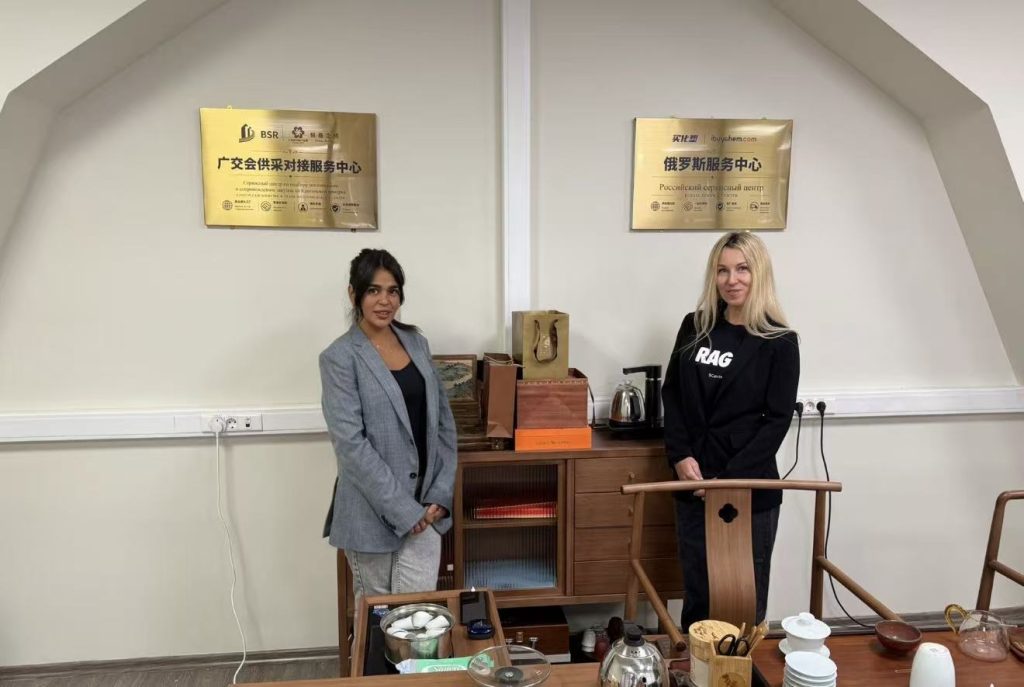
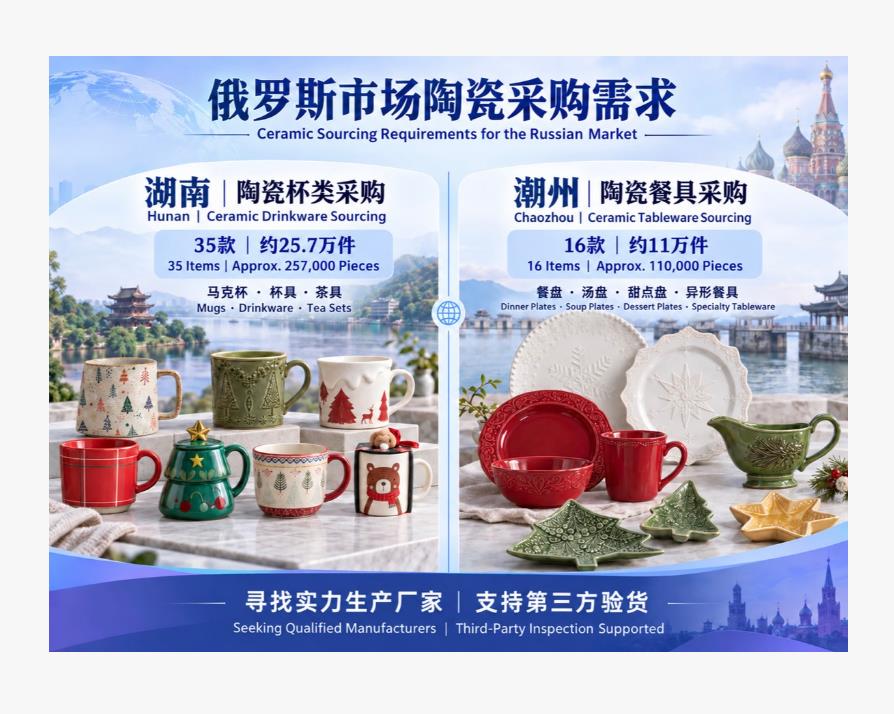
A recent BSR ceramic sourcing project for the Russian market illustrates why a professional RFQ is more than a list of product pictures. The buyer’s requirements were divided into two regional supplier pools so that factories could be compared where their capabilities were strongest
| HUNAN / LILING-SIDE POOL: 35 line items • approx. 257,000 units Mostly 350–450 ml mugs, textured mugs, lidded mugs, gift sets and tea ware Typical line quantity: 5,000–7,500 units | CHAOZHOU-SIDE POOL: 16 line items • approx. 110,000 units 20–26 cm plates, 600 ml soup plate, rectangular platter, sauce boat and a textured mug Typical line quantity: 5,000–7,000 units |
| COMMON COMMERCIAL RULES: 12 units per master carton for the referenced lines Quote at the estimated quantity; if below MOQ, quote at MOQ and state the MOQ Factory must paste an image of the product actually quoted | MARKET & QUALITY CONTROL: Destination market: Russia Third-party inspection required before shipment Selected gift packaging called for printed sleeves or colour boxes, CMYK + 2 Pantone colours, matte lamination and spot varnish |
Important: six plate-related lines appear in both regional workbooks. This created a basis for cross-region comparison, but it also means the two pool totals should not be added together as though they were a single, non-overlapping final order.
What the brief did well
- It required each factory to quote the estimated order quantity and disclose its MOQ when the requested quantity was below MOQ.
- It prevented vague catalogue substitutions by requiring the supplier to paste the image of the product it was actually quoting.
- It captured dimensions, capacity, weight, material and packaging rather than relying on an image alone.
- It stated the destination market and third-party inspection requirement at the quotation stage, not after supplier selection.
- It separated different supplier pools, allowing the buyer to compare factories whose production strengths matched the product family.
What BSR still needs to control after the RFQ
A well-built RFQ is the start—not the finish. BSR must still check whether each quotation follows the requested material and decoration; whether capacity is measured the same way; whether packaging specifications are fully included; whether the stated factory can actually produce the line; whether the sample matches the quotation; and whether the mass-production lot matches the approved sample. For overlapping items, BSR can normalize the two regional quotations and compare total value, not only the unit price.
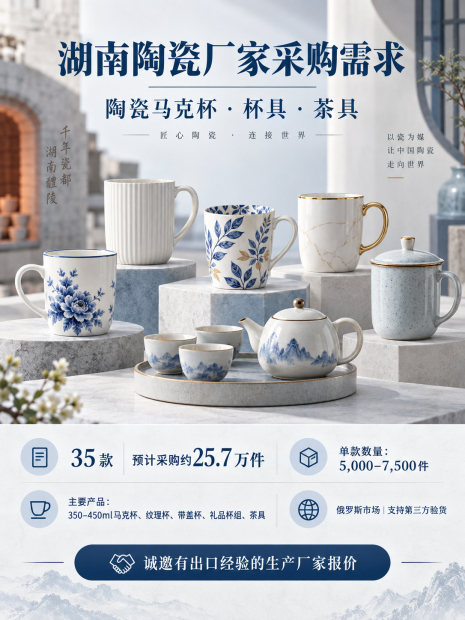
Figure 1. Hunan / Liling-side ceramic RFQ summary used in the real procurement case.
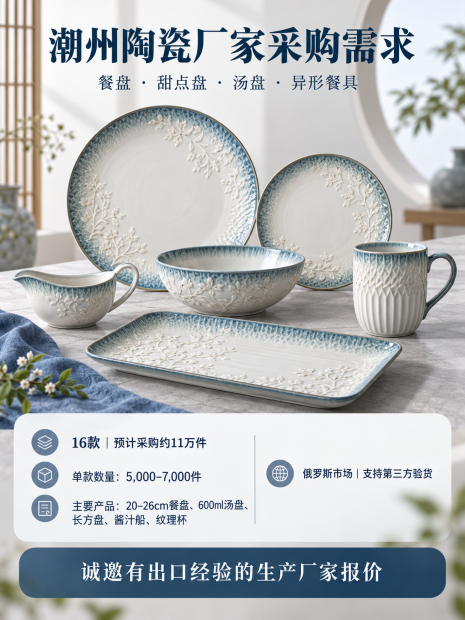
Figure 2. Chaozhou-side ceramic RFQ summary used in the real procurement case.
The Minimum Information Every Ceramic RFQ Should Contain
| RFQ field | What to specify | Why it matters |
| Product identity | Buyer reference image, SKU, product name and intended use | Prevents different suppliers from interpreting the item differently. |
| Dimensions & capacity | Diameter/length/height, usable or brimful capacity, target weight and tolerances | A 400 ml cup can have different dimensions, weight and material consumption. |
| Body & finish | Porcelain/stoneware/bone china, glaze type, colour standard, texture, decal, reactive glaze, gold or metallic decoration | These choices affect factory routing, firing, durability, tests and cost. |
| Quantity & MOQ | Estimated quantity per SKU, annual forecast, acceptable MOQ and replenishment expectation | Factory selection changes when the programme is 500 units, 5,000 units or 50,000 units. |
| Packaging | Unit packing, gift box/sleeve, print colours, lamination, spot varnish, dividers, master-carton quantity and marks | Packaging can materially change cost, lead time, breakage and inspection scope. |
| Market & compliance | Destination country, food-contact/decorative use, required test methods, declarations, labels and customer standards | Avoids selecting a factory before confirming it can supply the required evidence. |
| Commercial terms | Currency, Incoterm/port, tooling, samples, payment, lead time and quote validity | Makes offers comparable and exposes costs hidden outside the unit price. |
| Quality acceptance | Approved sample, defect classification, AQL or agreed sampling plan, key measurements and inspection timing | Creates an enforceable production and inspection baseline. |
Quality and Compliance: Do Not Accept “Food Safe” as a Complete Answer
Ceramic food-contact requirements are market-specific. In the European Union, ceramic articles intended to contact food are subject to rules addressing lead and cadmium migration. In the United States, FDA guidance and compliance policy address extractable lead and cadmium in ceramicware. The applicable product category, sampling, test conditions, limits, lab scope, declaration and labelling must be confirmed for the buyer’s destination and use case.
This is especially important when the product includes bright colours, overglaze decoration, metallic rims, reactive glazes or a decorative surface close to the food-contact or lip-contact area. A previous test report is useful only if it covers the same material, glaze, decoration, production process and relevant market requirement.
A PRACTICAL CERAMIC QUALITY PLAN SHOULD COVER
- Product identity, material/body and approved colour/finish
- Dimensions, usable capacity, weight and key tolerances
- Glaze appearance, pinholes, crawling, crazing, warpage, cracks and sharp points
- Decal placement, colour, abrasion, metallic decoration and logo/back stamp
- Handle alignment and strength, lid fit, rocking, stacking and functional checks
- Food-contact migration testing where applicable
- Thermal-shock, microwave or dishwasher claims when required by the buyer
- Inner packaging, drop/breakage protection, carton quantity, marks and barcode accuracy
- Pre-shipment inspection with recorded sample size and acceptance criteria
Seven Common Sourcing Mistakes
| 1 | Searching nationally before defining the product family:This creates an unmanageable supplier list and gives equal weight to factories with very different process strengths. |
| 2 | Sending only reference images:Images rarely define body, capacity, weight, decoration, packaging, test requirements or acceptable variation. |
| 3 | Comparing unit price before normalizing the offer:MOQ, tooling, packing, inland freight, testing, payment terms and quality grade can reverse the apparent ranking. |
| 4 | Giving every SKU to one factory:Convenience can hide process mismatch. Use a lead factory only when it can genuinely control the required processes and subcontractors. |
| 5 | Approving a sample without a written standard:A good sample does not control mass production unless it is linked to specifications, colour records, signed photos and inspection criteria. |
| 6 | Discussing packaging after product approval:Gift boxes, printed sleeves, inserts, carton quantity and drop protection can change price, timeline and product fit. |
| 7 | Treating inspection as a final-day photo service:Inspection works only when the buyer and supplier agree in advance on the product standard, sample plan, defects and corrective-action process. |
How BSR Manages the Complexity for Overseas Buyers
For a multi-region ceramic programme, the buyer should not have to coordinate dozens of factories, translate every technical detail, reconcile incompatible quotations and travel across China to check production. BSR can act as the buyer’s local sourcing and execution team, while keeping the factory quotation and service scope transparent.
| Stage | What BSR does | Buyer receives | |
| 1. Brief engineering | Clarifies specifications, target market, quantity, packaging, quality priorities and commercial constraints; turns them into a controlled line-level RFQ. | A clean scope that qualified factories can quote on the same basis. | |
| 2. Regional routing | Allocates mugs, tableware, art pieces, hotelware, sanitary ware or slabs to suitable regional pools instead of running a generic nationwide search. | A supplier strategy aligned with actual production strengths. | |
| 3. Supplier qualification | Checks company identity, factory location, product focus, process ownership, capacity, export experience and relevant records; arranges factory visits when needed. | A defensible shortlist, not a directory dump. | |
| 4. Quotation normalization | Separates ex-factory product price, tooling, packaging, samples, inspection/testing, freight and BSR service fees. | Comparable commercial offers and visibility into where money is being spent. | |
| 5. Sample management | Coordinates sample requests, consolidates shipments, records deviations, supports review and establishes an approved production reference. | Fewer courier shipments and a documented approval trail. | |
| 6. Quality control | Plans inspections, checks production evidence, arranges testing where agreed, records non-conformities and follows corrective action. | Independent evidence before final payment and shipment. | |
| 7. Order & export coordination | Tracks timeline, packing, documents, shipment and supplier follow-up; preserves project records for repeat orders. | One local coordination point from brief to delivery. | |
| Transparent commercial structure:Factory quotations stay visible. BSR’s service commission is quoted separately, together with any agreed third-party costs such as inspection, testing, freight or customs support. This allows the buyer to evaluate the supplier economics and the sourcing service as separate decisions. | |||
What the buyer needs to provide
- Product reference images, drawings, samples or links
- Destination market and sales channel
- Estimated quantity per SKU and expected repeat volume
- Material, size, capacity, colour, decoration and performance requirements
- Packaging, labelling and barcode requirements
- Target timeline, preferred Incoterm and budget/quality priorities
- Any mandatory tests, customer standards or known quality risks
Frequently Asked Questions
Should I choose the region first or the factory first?
Use the region to narrow the search, then qualify the factory. Regional specialization improves search efficiency, but only factory-level evidence confirms capability.
Can one factory supply mugs, plates, tea sets and gift packaging?
Sometimes, but do not assume it. Confirm which processes are in-house, which are outsourced and who is responsible for final quality. A multi-factory programme may be safer when the product families require different forming or decoration processes.
Is the lowest unit price usually the best offer?
No. Compare the complete, normalized offer: product grade, MOQ, tooling, packaging, testing, inspection, inland transport, lead time, payment terms, expected breakage and replacement risk.
How many suppliers should receive the RFQ?
Enough to create a credible comparison, but only after pre-qualification. For a defined product family, a focused shortlist of capable factories is usually more useful than sending the brief to dozens of unverified contacts.
When should third-party inspection be planned?
At the RFQ and contract stage. The supplier must know the inspection scope, acceptance criteria, timing and consequences of non-conformity before production begins.
Can BSR handle sourcing when I cannot travel to China?
Yes. BSR’s website service flow covers supplier matching, verification, quotation comparison, sample coordination, on-site quality control, order follow-up and export coordination. The agreed scope should be documented for each project.
| Start with a ceramic sourcing brief:Send BSR your product references, target market, estimated quantities, packaging requirements and timeline. We can route the project to the appropriate Chinese production clusters, prepare a standardized RFQ, qualify suppliers, compare quotations, coordinate samples, arrange quality checks and follow the order through export coordination. |
Submit your sourcing request at:
www.buildsilkroad.com
Email: contact@buildsilkroad.com | China: +86 19925745753