
How BSR Solved a Premium Activewear Brand’s Print Fading Headache

In custom yoga wear manufacturing, turning a print design from a digital file into a finished garment that withstands repeated washing and stretching requires a complete technical process.
Recently, we received an order from a premium Indian activewear brand. Their design was sophisticated — intricate gradient prints with complex color combinations. However, the client reported that samples from their previous factory showed noticeable fading after just two or three washes, along with slight bleeding at the print edges.
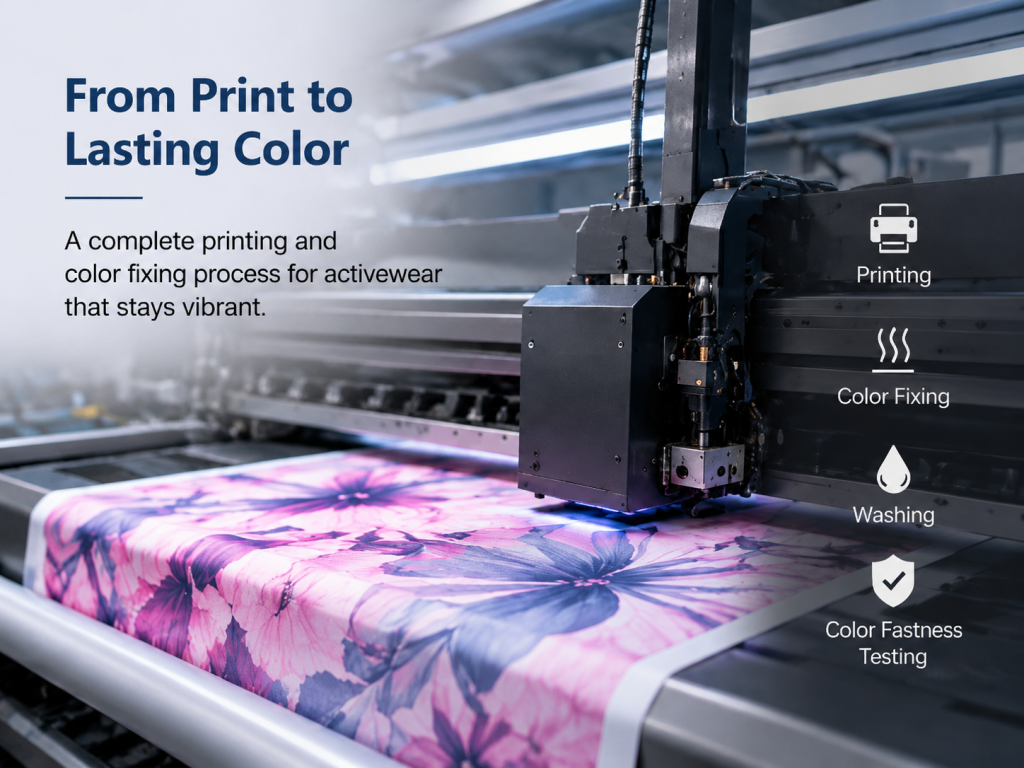
This issue was familiar to us. Print fading is almost always a fixation problem.
Printing is the first step. Patterns are transferred to fabric primarily through two methods: Screen printing delivers high color saturation and is ideal for large-volume orders and designs with distinct color blocks. Direct-to-garment (DTG) digital printing, on the other hand, requires no screen-making and is better suited for small-batch customization and complex patterns with gradients and fine details. The Indian client’s design fell into the former category, so we used screen printing to preserve the natural gradation. Whichever method is used, the pigment paste must be precisely formulated according to the client’s color standards before printing begins
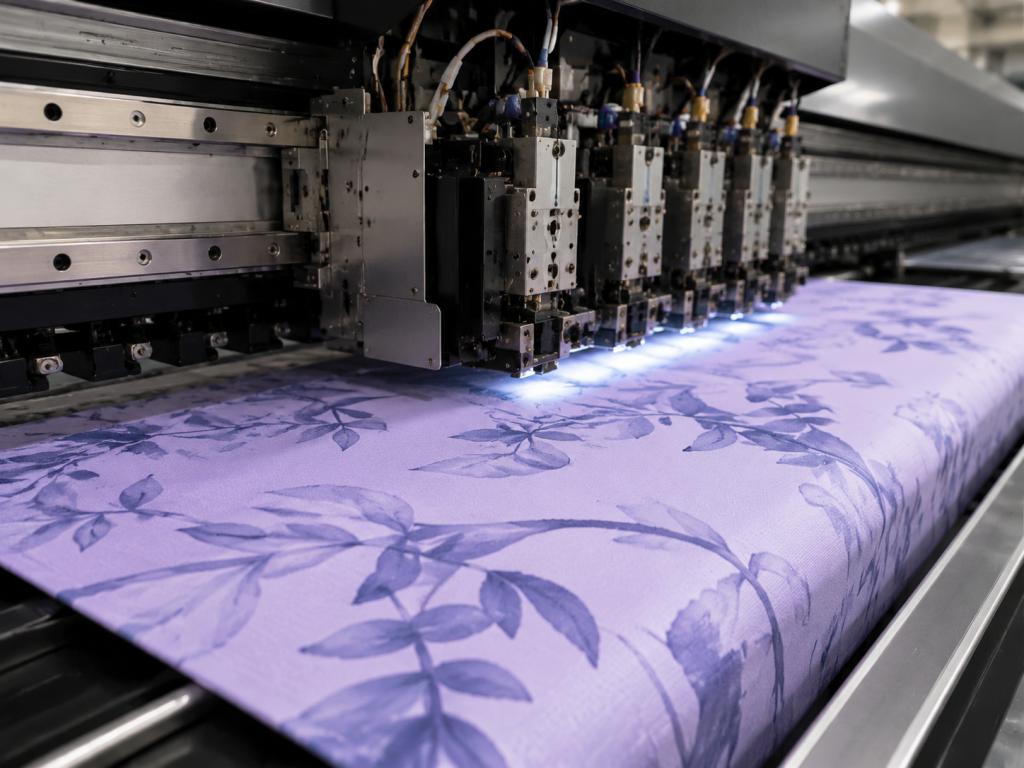
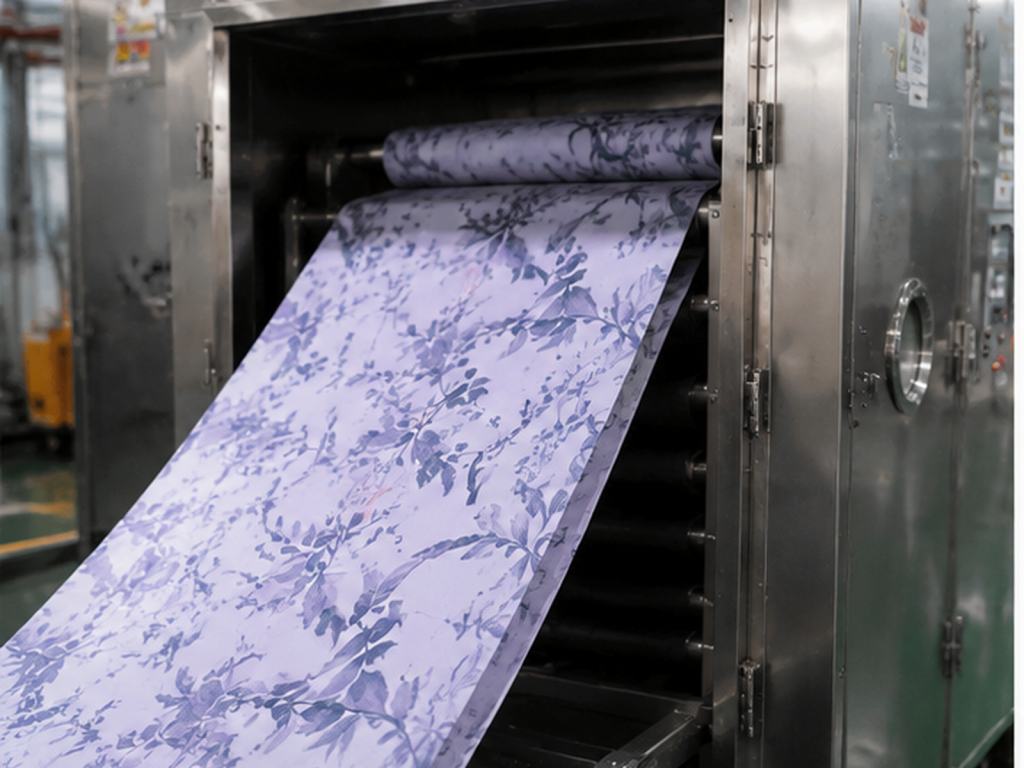
Fixation is the most critical step in the entire process.The essence of fixation is creating a chemical bond between dye molecules and fiber molecules, locking the color firmly into the fabric. Without proper fixation, colors will wash out after a single cycle. There are three common fixation methods:
Steam Fixation (Reactive Dyes):The fabric is treated in saturated steam at 102–105°C for 10–15 minutes, allowing the dye to fully react and bond with the fibers.
Heat Curing (Pigment Printing): The fabric is baked at 150–160°C for 40–80 seconds, curing the binder that holds the pigment onto the fabric surface.
High-Temperature Fixation (Disperse Dyes): Used primarily for polyester fabrics, this process uses high heat to drive dye molecules into the interior of the fibers.
For this Indian client’s fabric (nylon-spandex with reactive dyes), we used steam fixation, strictly adhering to the parameters of 102–105°C in saturated steam for 15 minutes, with full temperature data logging throughout the process.
After fixation, unfixed dyes and residual chemical auxiliaries remain on the fabric surface. These loose pigments must be thoroughly removed through a washing process using cold water, warm water, and soaping agents. If left in place, they can transfer to the skin or other garments during subsequent wear. The washed fabric is re-dried and then fed through a tenter frame to stretch it back to standard width, eliminating wrinkles and restoring flatness.
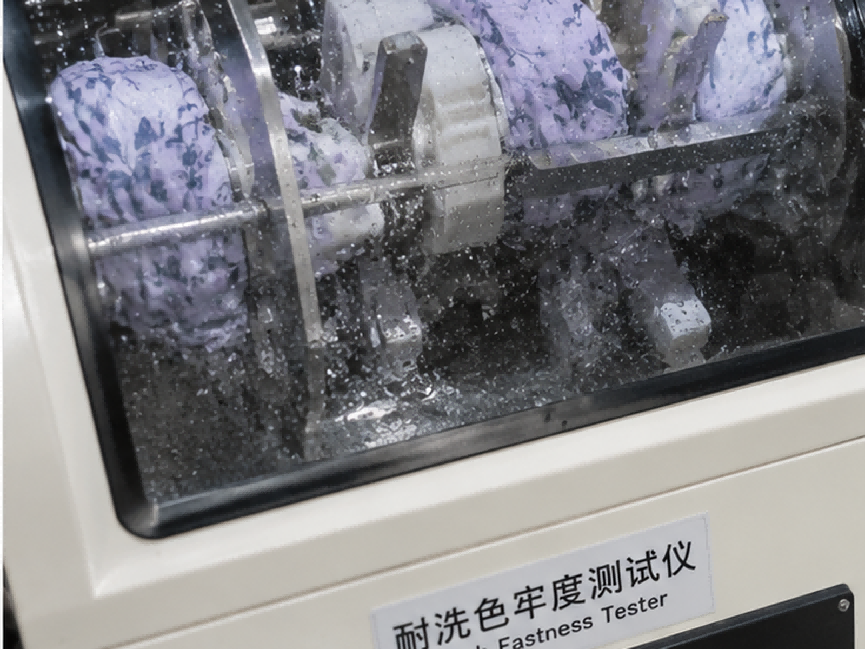
The final step is colorfastness testing. We conduct two key tests: Wash colorfastness, which simulates home laundering conditions to check for fading or color transfer; and Rubbing colorfastness, which uses dry and wet white cloths rubbed against the printed surface to check for color loss. Only after both tests are passed does the fabric move to the cutting and sewing stage.
When the finished samples reached the Indian client, they sent a follow-up email specifically praising the color retention, noting it was significantly superior to their previous supplier’s work.
A common misconception: many assume deeper colors are more prone to fading. In reality, colorfastness depends primarily on the quality of the fixation process, not the depth of the shade. Light colors with poor fixation will fade just as readily, while deep colors with proper fixation can be exceptionally stable.
In our factory, even at the sample stage, every printed order is logged with fixation temperature, time, and parameters, with retained samples kept for ongoing tracking. We never cut corners by shortening fixation time to meet tight deadlines — one minute less can drop colorfastness by an entire grade.
This issue was familiar to us. Print fading is almost always a fixation problem.
Printing is the first step. Patterns are transferred to fabric primarily through two methods: Screen printing delivers high color saturation and is ideal for large-volume orders and designs with distinct color blocks. Direct-to-garment (DTG) digital printing, on the other hand, requires no screen-making and is better suited for small-batch customization and complex patterns with gradients and fine details. The Indian client’s design fell into the former category, so we used screen printing to preserve the natural gradation. Whichever method is used, the pigment paste must be precisely formulated according to the client’s color standards before printing begins
Fixation is the most critical step in the entire process.The essence of fixation is creating a chemical bond between dye molecules and fiber molecules, locking the color firmly into the fabric. Without proper fixation, colors will wash out after a single cycle. There are three common fixation methods:
Steam Fixation (Reactive Dyes):The fabric is treated in saturated steam at 102–105°C for 10–15 minutes, allowing the dye to fully react and bond with the fibers.
Heat Curing (Pigment Printing): The fabric is baked at 150–160°C for 40–80 seconds, curing the binder that holds the pigment onto the fabric surface.
High-Temperature Fixation (Disperse Dyes): Used primarily for polyester fabrics, this process uses high heat to drive dye molecules into the interior of the fibers.
For this Indian client’s fabric (nylon-spandex with reactive dyes), we used steam fixation, strictly adhering to the parameters of 102–105°C in saturated steam for 15 minutes, with full temperature data logging throughout the process.
After fixation, unfixed dyes and residual chemical auxiliaries remain on the fabric surface. These loose pigments must be thoroughly removed through a washing process using cold water, warm water, and soaping agents. If left in place, they can transfer to the skin or other garments during subsequent wear. The washed fabric is re-dried and then fed through a tenter frame to stretch it back to standard width, eliminating wrinkles and restoring flatness.
When the finished samples reached the Indian client, they sent a follow-up email specifically praising the color retention, noting it was significantly superior to their previous supplier’s work.
A common misconception: many assume deeper colors are more prone to fading. In reality, colorfastness depends primarily on the quality of the fixation process, not the depth of the shade. Light colors with poor fixation will fade just as readily, while deep colors with proper fixation can be exceptionally stable.
In our factory, even at the sample stage, every printed order is logged with fixation temperature, time, and parameters, with retained samples kept for ongoing tracking. We never cut corners by shortening fixation time to meet tight deadlines — one minute less can drop colorfastness by an entire grade.