
Incoming Materials, Production, and Final Inspection: When Should You Inspect?
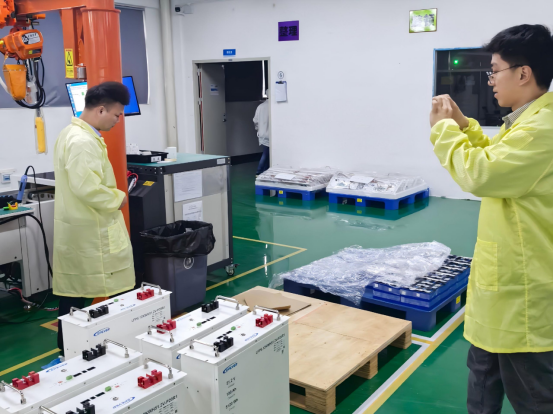
For overseas buyers sourcing heavy industrial goods or custom precision parts from China, relying solely on a Pre-Shipment Inspection (PSI) is a high-risk gamble.
When your goods are 7,000 miles away and locked inside a shipping container, finding a defect at the final hour leaves you with two terrible choices: delay your entire supply chain for weeks of rework, or ship defective products to your end-customers.
To eliminate supply chain nightmares, you must understand the three distinct inspection checkpoints—and know exactly when to intervene.
Part 1: Theoretical Guide – Why Pre-Shipment Inspection (PSI) Is Not Enough
Many catastrophic sourcing failures occur because buyers treat quality control as a single event at the end of production. However, certain fatal defects become completely irreversible once the product is fully assembled, heat-treated, or painted.
To safeguard heavy-duty and precision components, quality control must be split into three critical phases:
1. Incoming Material Inspection (IQC): Stopping Material Traps Early
Unverified suppliers often cut costs by substituting specified high-performance alloys with cheaper, lower-grade alternatives.
The Danger: Material swapping—such as substituting hardened Boron steel with cheap manganese steel—is invisible to the naked eye. In cold-weather applications, this material swap causes metal to shatter like glass under impact.
The Solution: Conduct raw material verification and lab testing (such as hardness and chemical composition tests) before raw stock enters the production line.
2. During Production Inspection (DUPRO): Catching Dimensional Errors
During mass production, minor tooling wear or inaccurate setups can cause subtle deviations that ruin an entire batch.
The Danger: A tiny 1.5mm error in bolt-hole spacing renders a 200lb steel blade completely impossible to mount on standard Western machinery—turning a $50,000 shipment into unusable scrap metal.
The Solution: Use custom 1:1 steel jigs to test hole patterns and dimensions before surface coatings or powder coats are applied.
3. Pre-Shipment Inspection (PSI): Final Functional & Packaging Gate
PSI should only serve as a final confirmation for cosmetics, packaging, quantity, and loading compliance—not as the first time you discover structural defects.
💡 Actionable Takeaway for Heavy & Precision Sourcing:
Never wait until loading day. For high-precision or load-bearing hardware, mandate 100% custom-jig testing before surface treatment and demand on-site Rockwell Hardness (HRC) testing straight out of the furnace.
Part 2: Case Study – BSR In Action (English Version)
Zero Micro-Cracks & 100% Power Output for 10,000 Commercial Solar Modules
Last spring, a European commercial solar EPC contractor faced a major roadblock: a 5MW rooftop PV project had a non-negotiable grid-connection deadline in 90 days, but their local European distributor suffered massive supply delays. Facing severe delayed-completion penalties, they turned to China for 10,000 high-efficiency N-type TOPCon solar modules—but were deeply terrified of cell-downgrade fraud (B-grade cells sold as A-grade), hidden micro-cracks, and power rating mismatches.
When they appointed BSR as their local China purchasing office, we took full control across all three inspection stages on the factory floor:
1. Direct OEM Vetting & Material Control (IQC)
We audited the OEM manufacturing base directly and verified raw material origin before production started. We checked cell batch certificates to ensure 100% A-grade N-type TOPCon cells (zero cell mixing) and measured the anodized aluminum mounting frame wall thickness on-site, ensuring it strictly met the 1.5mm structural spec (intercepting the factory’s attempt to substitute thinner 1.1mm frames for cost-cutting).
2. In-Process EL Testing & Cell Inspection (DUPRO)
During string soldering and lamination, our on-site inspectors monitored the line’s online Electroluminescence (EL) testing stations. We intercepted and replaced 120+ cells exhibiting internal micro-cracks and ribbon misalignments before final lamination—eliminating future hotspot failure risks in the field before they were permanently sealed.
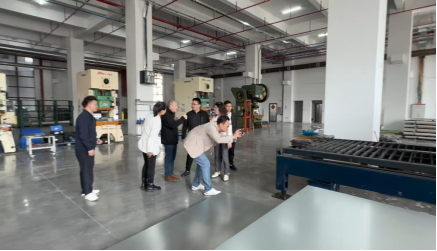
3. On-Site Flash Testing & Final Packaging Control (PSI)
We personally supervised the solar flash simulator testing (STC standard conditions) to verify that all modules maintained a strict positive power tolerance (+0 to +5W). We also verified IP68 junction box potting seals and supervised specialized vertical wooden pallet packaging to prevent transportation-induced micro-cracks.
The Result:
All 10,000 custom solar modules arrived at the European job site 10 days ahead of the grid-connection deadline.
💥 Zero micro-cracks or power degradation reported during on-site EL audits.
💥 100% mechanical fitment on mounting structures with zero frame alignment issues.
💰 24% total procurement savings—putting over $120,000 directly back into the client’s project margin.
The Takeaway:
“In solar, a hidden micro-crack today is a costly hotspot fire tomorrow. BSR gave us total peace of mind 7,000 miles away.” — That’s the difference between blindly buying panels online and having a true solar expert on the shop floor.
Need Boots on the Ground for Solar & Renewable Energy Inspections?
Don’t let B-grade cells, micro-cracks, or wattage degradation ruin your project ROI. Get professional verification before your goods leave China.
[👉 Request Supplier Verification or Solar Inspection]